
Transitioning from Straightened Hair to Natural Curls: A Complete Guide
Embracing your natural curls after years of straightening is a transformative journey that requires patience, knowledge, and dedication.
Understanding Your Natural Hair Structure
Before beginning your transition, it’s crucial to understand what makes curly hair fundamentally different from straight hair. Your hair’s texture is determined by the shape of your hair follicle. Straight hair grows from round follicles, while curly hair emerges from oval or asymmetrical follicles. This shape causes the hair strand to curve as it grows.
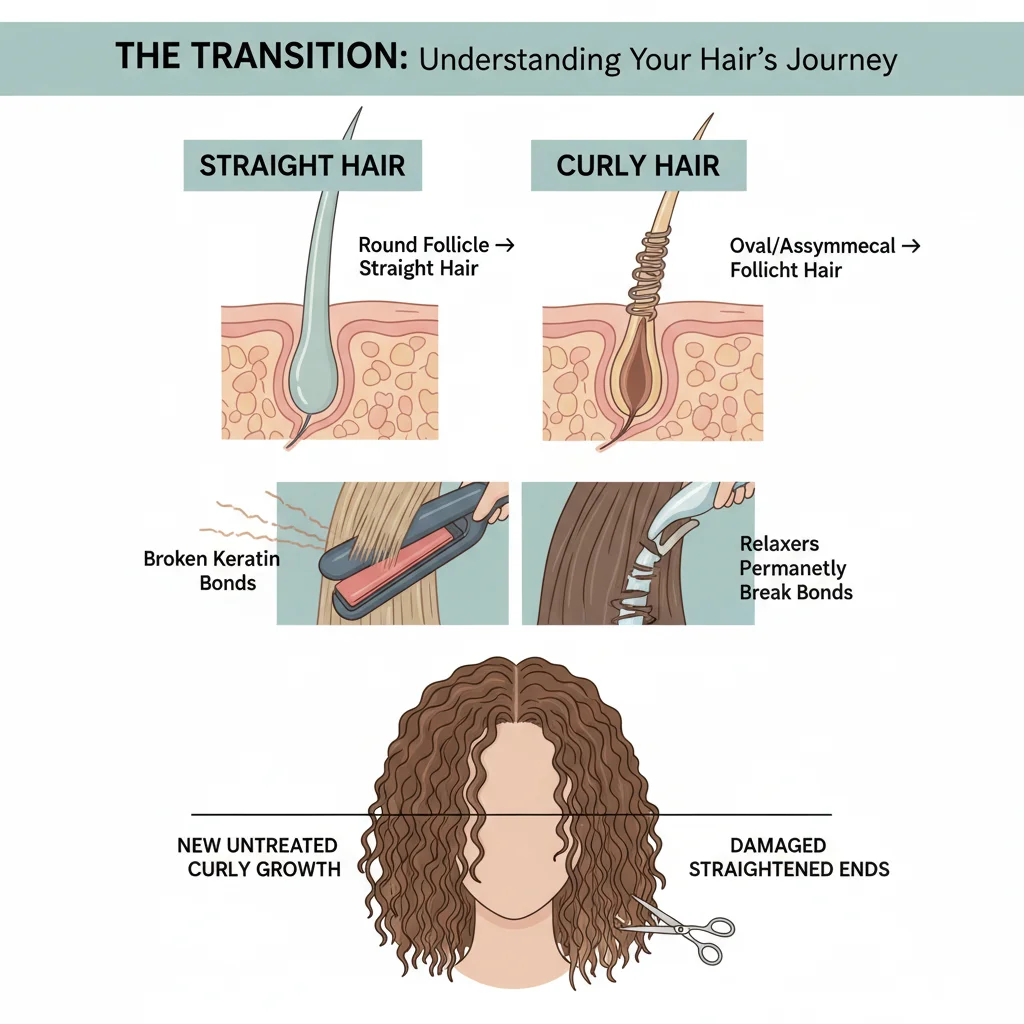
Years of heat styling and chemical treatments alter this natural structure. Heat breaks down the keratin bonds that give hair its shape, while relaxers permanently break these bonds to straighten the hair. Transitioning means allowing new, untreated hair to grow while managing the damaged ends until you’re ready to cut them off.
Key Insight: Your natural curl pattern is determined by genetics, but its appearance can be affected by damage, hydration levels, and styling techniques. The roots of your hair will always grow in with your natural pattern once you stop altering them.
Identifying Your Curl Type
Understanding your specific curl pattern will help you choose appropriate products and techniques. The most widely used classification system is Andre Walker’s Hair Typing System:
| Type | Description | Characteristics |
|---|---|---|
| Type 2 (Wavy) | Loose, S-shaped waves | 2A: Fine, thin waves 2B: Medium-textured waves 2C: Thick, coarse waves |
| Type 3 (Curly) | Defined spiral curls | 3A: Large, loose curls 3B: Medium, springy curls 3C: Tight, corkscrew curls |
| Type 4 (Coily) | Tight coils or zigzags | 4A: Dense, S-pattern coils 4B: Z-pattern, less definition 4C: Tight, fragile coils with minimal definition |
Preparing for Your Transition Journey
Successful transitioning requires mental and physical preparation. This journey is as much about embracing your natural identity as it is about hair care. Here’s how to set yourself up for success:
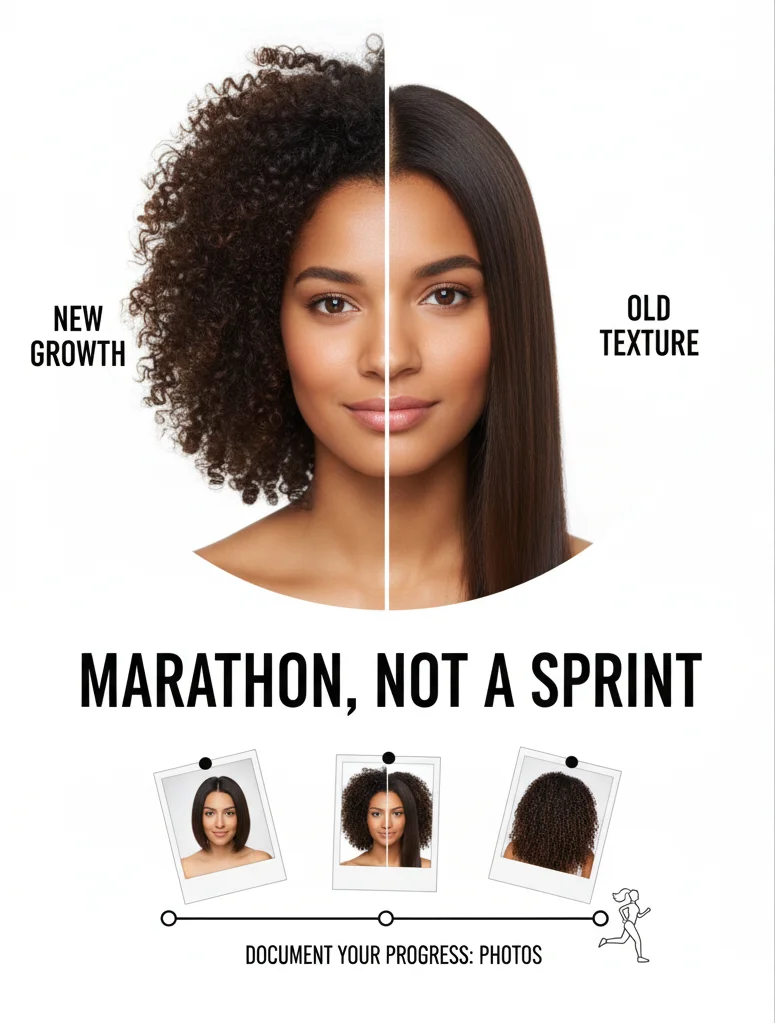
- Mental Preparation: Accept that this is a marathon, not a sprint. Your hair will go through awkward phases as two textures grow together. Document your progress with photos to stay motivated..
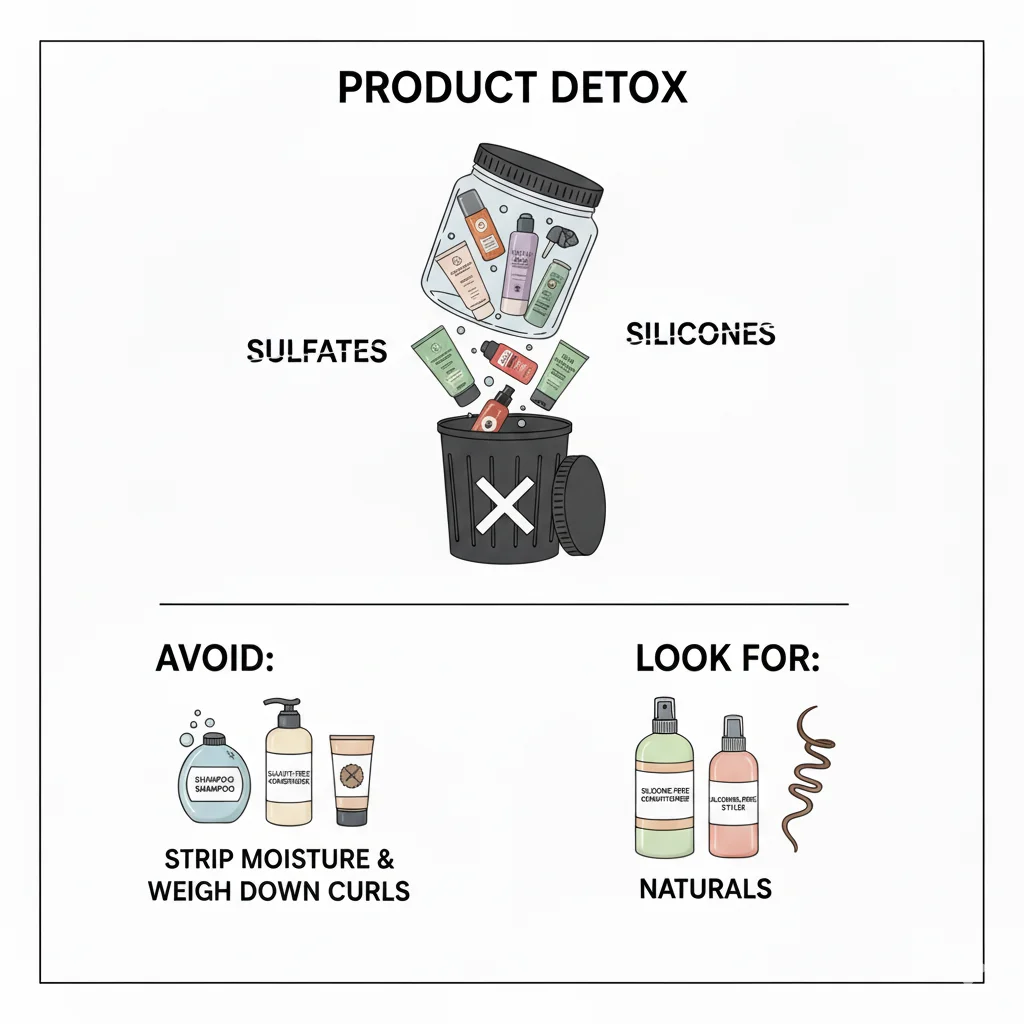
- Product Detox: Discard products containing sulfates, silicones, and drying alcohols. These ingredients strip moisture and weigh down curls. Look for sulfate-free shampoos, silicone-free conditioners, and alcohol-free stylers.
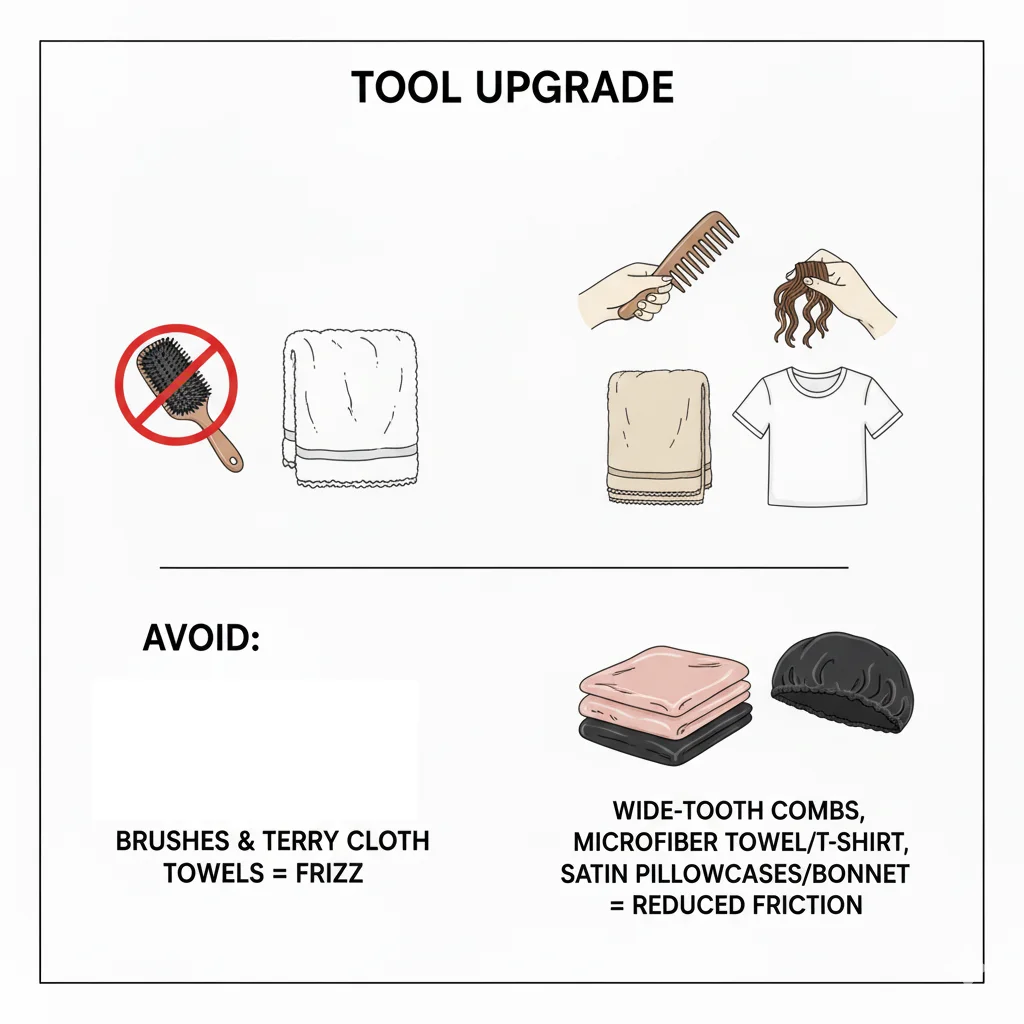
- Tool Upgrade: Replace brushes with wide-tooth combs or your fingers. Invest in a microfiber towel or cotton T-shirt for drying (terry cloth towels create frizz). Get satin pillowcases and bonnets to reduce friction while sleeping.
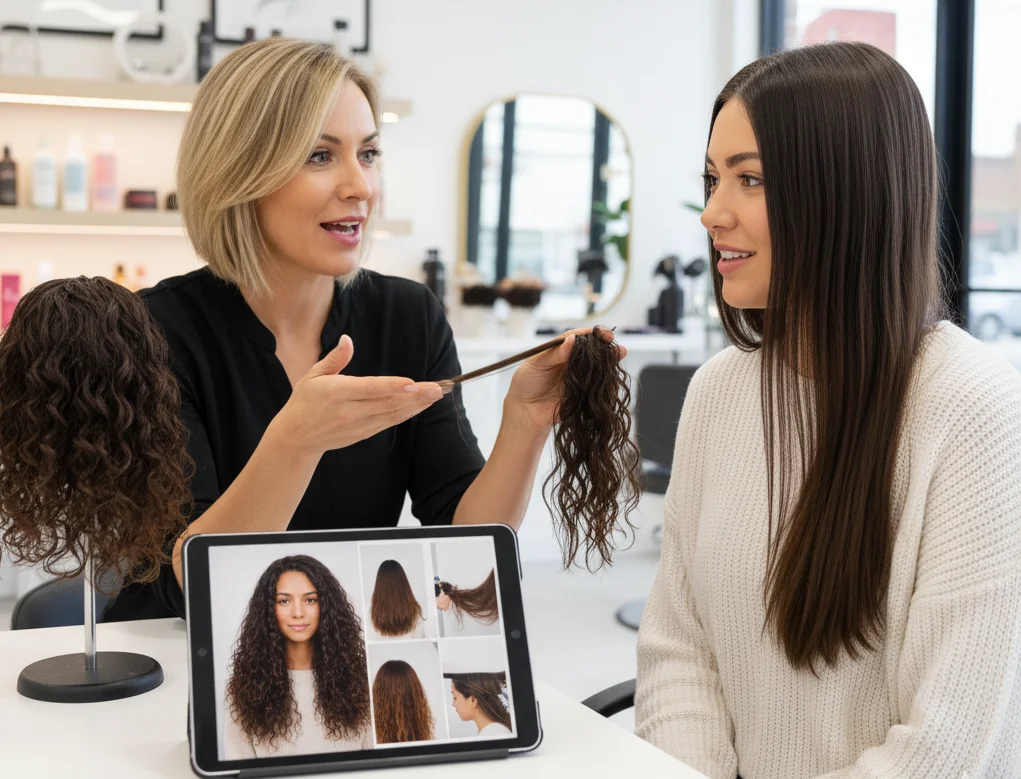
- Professional Consultation: Consider finding a stylist experienced in natural hair transitions. They can help you create a trimming plan and recommend products specific to your curl type.
The Transitioning Process: Step-by-Step
1. The Big Chop vs. Long-Term Transition
You have two primary approaches:
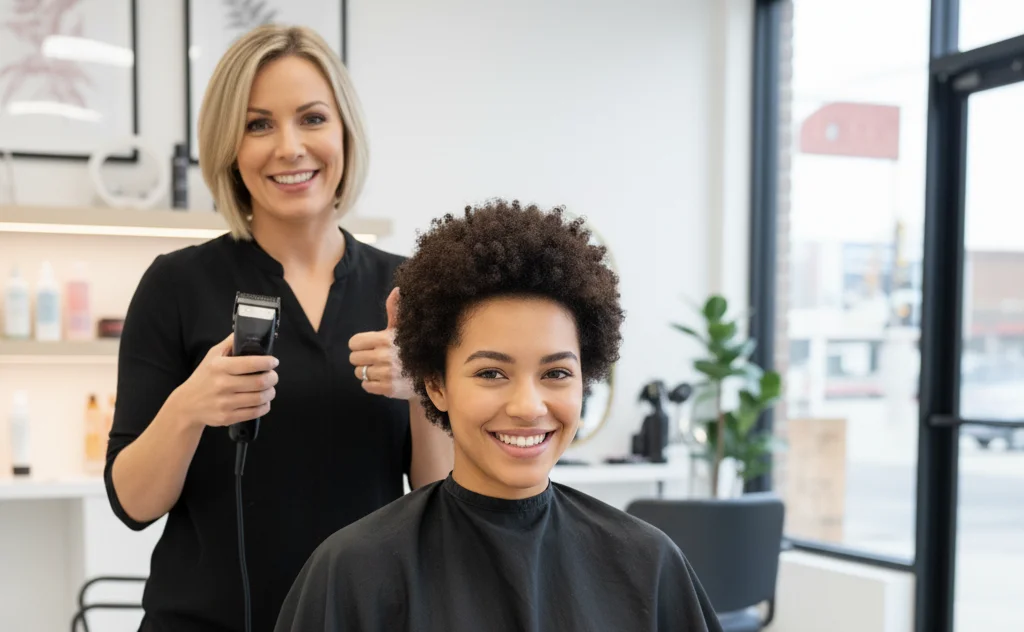
- The Big Chop: Cutting off all chemically treated or heat-damaged hair at once. This gives you immediate access to your natural texture but requires confidence to wear short hair.
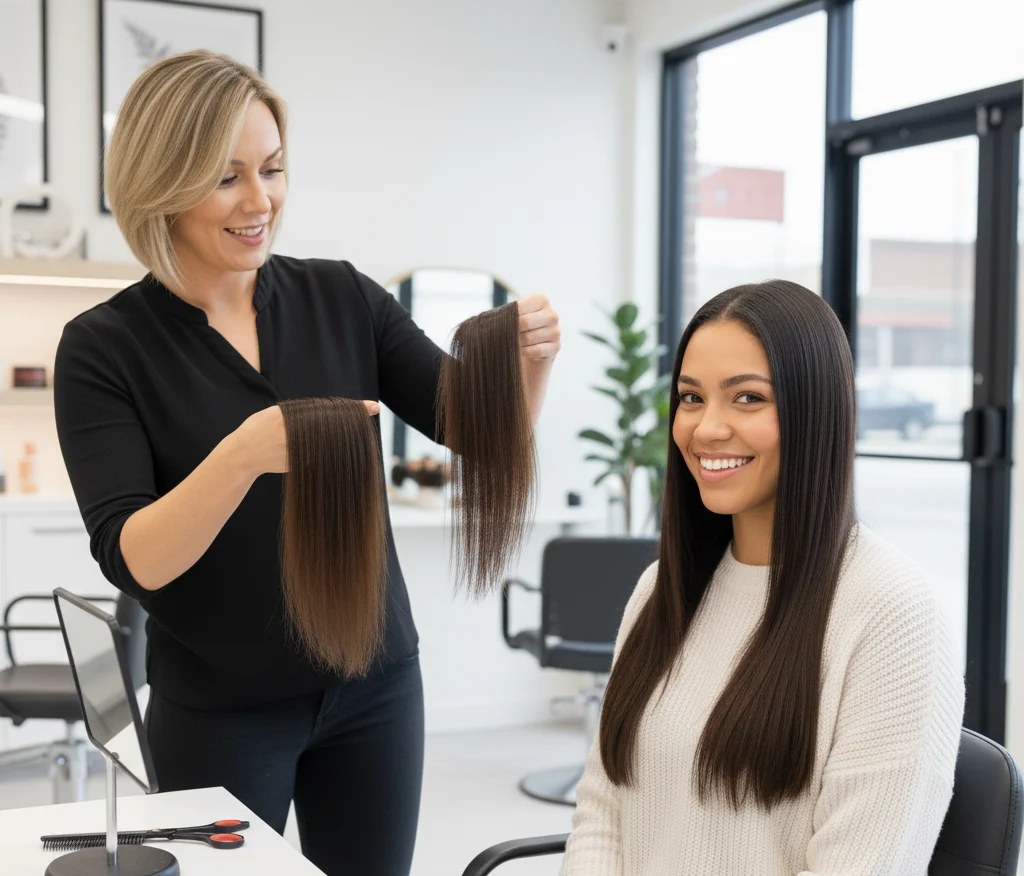
- Long-Term Transition: Gradually trimming damaged ends as new growth comes in. This preserves length but requires managing two textures for several months to years.
Choose based on your comfort level, lifestyle, and patience. Many opt for a hybrid approach—starting with a significant chop to remove major damage, then transitioning gradually.
2. Establishing a Gentle Cleansing Routine
Transitioning hair needs extra moisture and gentle care:
- Washing Frequency: Start with once every 7-10 days. Curly hair produces natural oils slowly, so frequent washing dries it out.
- Co-Washing: Use conditioner instead of shampoo 1-2 times between washes. This cleanses while preserving moisture.
- Shampoo Technique: Dilute sulfate-free shampoo with water. Focus on the scalp, letting suds run down strands. Avoid vigorous scrubbing.
- Pre-Poo Treatment: Apply coconut oil or olive oil to dry hair before washing. This protects strands from moisture loss during cleansing.
3. Deep Conditioning for Repair and Hydration
This is non-negotiable for transitioning hair. Deep conditioners penetrate the hair shaft to repair damage and restore elasticity:
- Frequency: Use a deep conditioner weekly for the first 3 months, then bi-weekly.
- Application: Apply to soaking wet hair after shampooing. Section hair and coat each strand thoroughly.
- Heat Enhancement: Cover with a plastic cap and apply heat for 15-30 minutes using a hooded dryer or warm towel. Heat opens the hair cuticle for better absorption.
- Key Ingredients: Look for proteins (hydrolyzed wheat, keratin) for strength and humectants (glycerin, aloe vera) for moisture.
4. Moisture and Protein Balance
Transitioning hair often suffers from porosity issues—damaged ends may be overly porous (losing moisture quickly) while new growth has normal porosity. Balance is key:
| Signs You Need… | Moisture Treatment | Protein Treatment |
|---|---|---|
| Indicators | Dryness, frizz, dullness, breakage when wet | Gummy/stretched hair when wet, limpness, excessive breakage |
| Ingredients | Glycerin, aloe vera, honey, shea butter | Hydrolyzed wheat, keratin, amino acids |
| Frequency | Weekly or as needed | Every 4-6 weeks or as needed |
Styling Techniques for Transitioning Hair
Managing two textures requires strategic styling to blend them seamlessly:
1. Protective Styling
These styles minimize manipulation and protect fragile ends:
- Buns and Updos: Gather hair into loose buns or ponytails using soft hair ties. This hides the demarcation line between textures.
- Twists and Braids: Install medium-sized twists or braids on damp hair with a leave-in conditioner. This stretches both textures and prevents tangles.
- Wigs and Weaves: Give your hair a complete break while it grows. Ensure your natural hair is properly cleansed and moisturized underneath.
- Important Note: Avoid styles that pull tightly on the edges. Transitioning hair is fragile and prone to breakage.
2. Blending Techniques for Wash-and-Go
If you prefer wearing your hair down, these methods help blend textures:
- Banding: After applying leave-in conditioner, section hair and wrap elastic bands from roots to ends. This stretches new growth to match the length of straightened ends.
- Braid-Outs/Twist-Outs: Create uniform curls by braiding or twisting damp hair. When dry, unravel for consistent waves/curls that blend textures.
- Roller Sets: Use flexi rods or perm rods on damp hair with setting lotion. This creates uniform curls from roots to ends.
- Diffusing: If you must use heat, attach a diffuser to your hair dryer on low heat/low speed. Cup curls in the diffuser and lift toward the scalp.
3. Nighttime Care
Protecting your hair while sleeping is crucial:
- Pineapple hair: Gather hair into a high, loose ponytail on top of your head using a scrunchie.
- Satin bonnet or scarf: Cover hair completely to reduce friction.
- Satin pillowcase: Use as a backup if your bonnet comes off during sleep.
- Refresh in the morning: Spray with water and leave-in conditioner, then reshape curls with fingers.
Overcoming Common Transition Challenges
1. Breakage at the Demarcation Line
The point where natural hair meets damaged hair is extremely fragile. Combat this with:
- Protein Treatments: Strengthen the weak point with hydrolyzed wheat protein treatments every 2-3 weeks.
- Low Manipulation: Avoid styles that require frequent restyling. Protective styles are ideal.
- Sealing Ends: After moisturizing, seal ends with heavy oils like castor or avocado oil to prevent splitting.
- Regular Trims: Schedule “dustings” every 8-12 weeks to remove split ends before they travel up the hair shaft.
2. Managing Frizz
Frizz is inevitable during transition but can be minimized:
- Layering Products: Use the LOC/LCO method: Liquid (water/leave-in), Oil, then Cream. Or Liquid, Cream, then Oil.
- Avoid Touching: Constantly touching hair disrupts curl patterns and creates frizz. Style and leave it alone.
- Anti-Humidity Shield: Apply a serum with dimethicone (silicone) on high-humidity days. While generally avoided, silicones can temporarily protect against moisture overload.
3. Dealing with Shrinkage
Natural curls shrink up to 75% of their actual length. Embrace it or manage it:
- Stretching Methods: Banding, African threading, or gentle blow-drying with a concentrator nozzle on cool air.
- Protective Styles: Styles like twists and buns showcase length while protecting ends.
- Mindset Shift: Understand that shrinkage equals healthy, hydrated curls. It’s a sign of good hair health.
Long-Term Care and Maintenance
Once you’ve trimmed all damaged ends, your focus shifts to maintaining healthy curls:
- Establish a Consistent Routine: Your hair thrives on predictability. Stick to a regular cleansing, conditioning, and styling schedule.
- Seasonal Adjustments: Hair needs change with weather. Add heavier products in winter (more sealing oils) and lighter ones in summer (more humectants).
- Scalp Health: Regularly massage scalp with oils like rosemary or peppermint diluted in a carrier oil. Healthy hair starts at the root.
- Regular Trims: Schedule trims every 3-4 months to remove split ends and maintain shape.
- Heat Limitation: Reserve heat tools for special occasions. Always use a heat protectant and keep temperature below 375°F (190°C).
Conclusion: Embracing Your Natural Curl Journey
Transitioning from straightened hair to natural curls is a profound act of self-acceptance and patience. It’s a journey that teaches you to listen to your hair’s needs, celebrate its unique characteristics, and redefine beauty on your own terms. Remember that every curl pattern is beautiful, and there’s no “right” way to have natural hair.
Throughout this process, prioritize hair health over length or perfect styling. The awkward phases, the breakage, and the product experiments are all part of the learning curve. Document your progress, connect with the natural hair community for support, and celebrate small victories along the way.
Ultimately, transitioning is about more than hair—it’s about reclaiming your identity and embracing the authentic you. Your curls are a crown of resilience, and with consistent care and love, they will flourish into their healthiest, most beautiful state. Trust the process, trust your hair, and most importantly, trust yourself.